Archive for the ‘safari’ Category

Tourism in Uganda

Tuesday, January 31st, 2012
Share

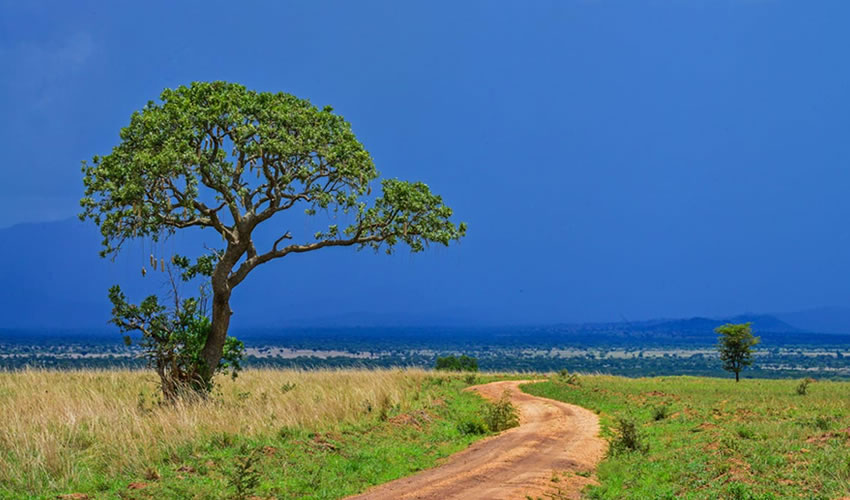
Tourism in Uganda is focused on Uganda’s landscape and wildlife. Uganda has a very diverse culture, landscape, flora, and fauna.

In the late 1960s, Uganda had a prosperous tourist industry with 100,000 visitors each year. Tourism was the country’s fourth largest earner of foreign exchange. The tourist industry ended in the early 1970s because of political instability. By the late 1980s, Uganda’s political climate had stabilized and conditions were suitable for reinvestment in Uganda’s tourist industry.
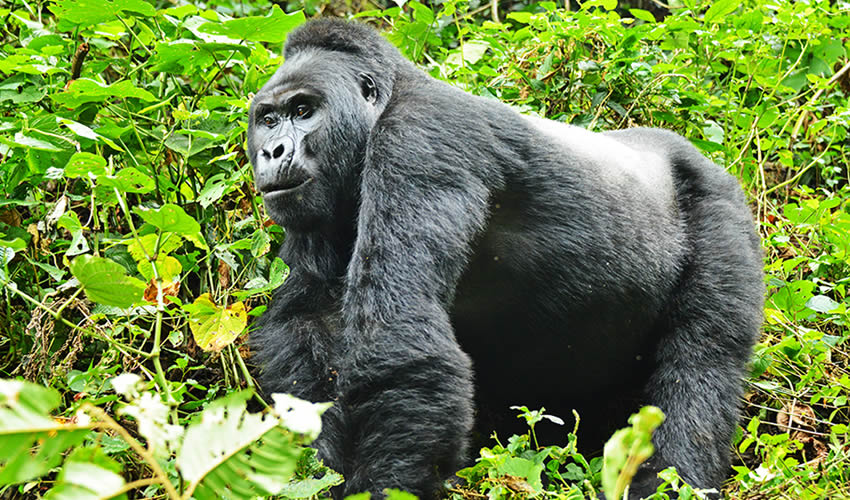
However, the loss of charismatic wildlife in previously popular safari parks such as Murchison Falls National Park and Queen Elizabeth National Park prevented these parks from competing with similar tourist attractions in neighboring Kenya and Tanzania. Uganda’s tourist industry instead promoted its tropical forests. The keystone of the new industry became Bwindi Impenetrable National Park. With more than 300 Mountain Gorillas, Bwindi Impenetrable National Park has approximately half of the world’s population of Mountain Gorillas.

Tourist attractions

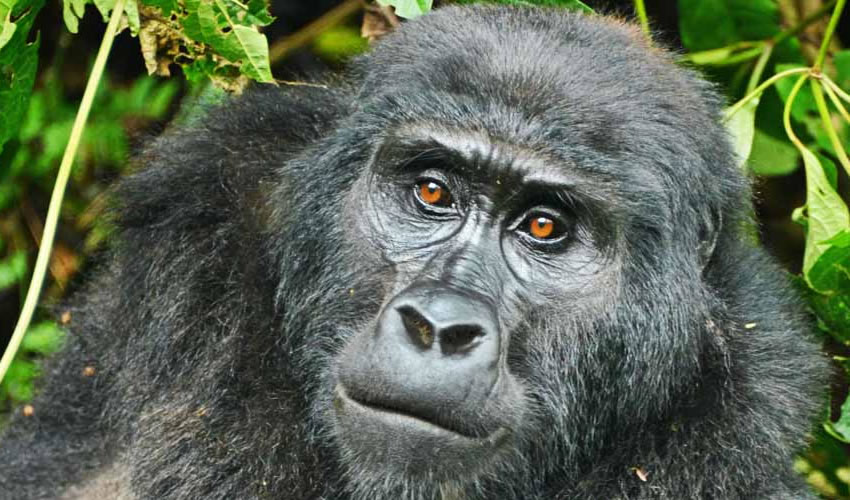
Uganda is one of only three countries where it is possible to visit Mountain Gorillas. The others are Rwanda and the Democratic Republic of the Congo.  Mountain Gorillas are Uganda’s prime tourist attraction. The vast majority of these are in Bwindi Impenetrable National Park, with a few others in Mgahinga National Park, both in southwestern Uganda. In Bwindi, visitors have been allowed to view the mountain gorillas since April 1993. The development of Gorilla tourism and the habituation of gorillas to humans is proceeding very carefully because of the dangers to gorillas, such as contracting human diseases.

Tree Climbing Lions

Although lions do not normally climb trees, they may sometimes do this when chased by another lion group or wild buffalo. The exception to this is in Queen Elizabeth National Park – Ishasha Sector of Uganda, where one finds the Tree Climbing Lions. They climb trees and rest on them in the afternoon, when the sun is high. This is a truly unique phenomenon. There have only been rare similar sightings in Lake Manyara National Park of Tanzania

By: Bruce Amp

Uganda set for Golden Jubilee

Monday, January 23rd, 2012
Share

Prior to Uganda getting independence, three sub-committees were set up to deal with Uganda’s national symbols. They were responsible for the National Flag, Anthem and Court of Arms. The sub-committee

Prof. Yusuf Kironde Lule is the president who served Uganda for the shortest term – just 68 days. He was 68 years the day he was asked to relinquish the presidency.

The first black principal of Makerere University College, Lule was installed president by the Uganda National Liberation Front (UNLF) shortly after the fall of dictator Idi Amin Dada.

Political analysts say being a Muganda, Lule was strategically made the first post-Amin president on April 13, 1979 to win support from the powerful Baganda ethnic group.

To some, Lule’s involvement in the anti-Amin struggle was a span of few weeks spent in hotel rooms and caucuses after flying from Scotland in the UK. To others he was like flies falling on a carcass killed by others.

As leader of the Uganda Freedom Fighters that merged with President Yoweri Museveni’s Popular Resistance Army to form the National Resistance Army (NRA) in 1981, Lule was the unlucky man that missed the chance to become today’s president as leader of NRA. He died shortly in 1985 before the NRA captured power.

Described by some as the only unifying factor of all Ugandans to form a post-Idi Amin government in 1979, Prof. Lule is also regarded by others as a conservative and rigid principal of Makerere University College – now Makerere University Kampala (MUK) during the colonial times (between 1940s and the 1960s). As principal, however, he is credited for encouraging and physically taking black students to Makerere University for better education.

Uganda’s political history, especially the politics of the events that unfolded before independence, would be incomplete without Benedicto Kiwanuka, who rose from a poverty-stricken family to emerge

By:  Bruce Amp

Foreign missions should do more to promote Uganda’s tourism sector

Thursday, December 22nd, 2011
Share


I

n response to the Sunday Monitor article, “Gifted but Branded no-go-zone”  (December 11 2011), how well are our foreign mission doing their job to present Uganda and also market it as a tourist destination to counter the negative information issued  by some western countries to their citizens. It’s hard to understand why we have so many foreign missions, even in countries like Australia that just recently appointed a consular as its representative in Uganda, to still issue such travel advisories as of November 2011, according to the article, warning its nationals to avoid traveling to some sections of the country depicted as dangerous due to the LRA war and terrorist attacks.

Our mission abroad need to stop playing a political role and refocus on being information points on Uganda’s investment and the country’s tourist potential being top priority as other countries in the region have done. The sector has the potential to be the biggest foreign exchange earner due to the many tourist attractions than any other country in the region and south of the Sahara, but we earn very little from tourism due to our inability to invest more resources into the sector, coupled with limited information and poor marketing by the lead government agencies. Kenya’s tourist industry earns around $82m from around $1.5m tourists annually with Uganda earning only around $3m in the same period from 400 000 visitors.

The paper quoted the publicity of  Wildlife Authority as saying that “what is a cause of concern for us is where Australia and New Zealand, which know nothing about us say don’t go to Bwindi and Mgahinga.” This is a valid observation but who is supposed to give this information to them?

Our foreign mission need to actively provide updated information about the country to all foreign visitors in the countries they are based. These missions need to have a full time information officer knowledgeable about Uganda’s tourist potential in addition to the line government agencies (tourism and foreign affairs) need to liaise so that the Pearl of Africa, as it celebrates its golden independence jubilee in 2012, attracts more tourists to realize the sector’s potential.

By: Bruce Ampumuza

Uganda in Marketing drive to grow tourism Sector

Tuesday, December 13th, 2011
Share

Creating Visibility: the Uganda Wild life Authority has lined up a number of strategies that seek to create for Uganda’s tourism

The Uganda Wildlife Authority in partnership with Civil Aviation Authority has branded Entebbe Airport seeking to showcase Uganda’s tourism features. The moves according the UWA will help to boost Uganda’s tourism

Speeking at the function in Entebbe recently, Dr Andrew Seguya, the UWA executive director, said branding is the first step in recognizing Uganda’s beauty, adding that in the second phase of project, the wild life body will brand the road signs from the airport to Kampala.

CAA offered six pillars and the facia for branding. According to Dr.Seguya, UWA is in negotiations with CAA to give them more space at the airport for the same. The Airport branding is among the initiatives that UWA and other players in the tourism industry are undertaking to fully exploit the visibility created by Lonely Planet, a British tourist guide that ranked Uganda the number one tourist destination to visit in 2012.

Reviewing Uganda Airlines

Tourism Minister Pro. Ephraim Kamuntu retaliated the need to revive the Uganda airlines to promote and develop the tourism industry. “A country cannot develop tourism conveniently and effectively if it does not own a National Airline,” Prof. Kamuntu said, adding “this will give the tourism sector a boost because the airline will work with world tourism coordinators and operators to bring in tourists.”

Dr. Seguya said other plans in showcasing Uganda’s beauty to promote tourism include branding National Parks, building better gates and signage, providing information about the protected areas through websites and and developing birding and other adventure products.

By: Bruce Ampumuza

Kisoro top Tourist Site

Thursday, December 8th, 2011
Share

National Geographic in its travel section under the ‘Best of the world 2012’, describes the Virunga Volcanoes as evidence of the “dual creative and destructive nature of volcanoes.”

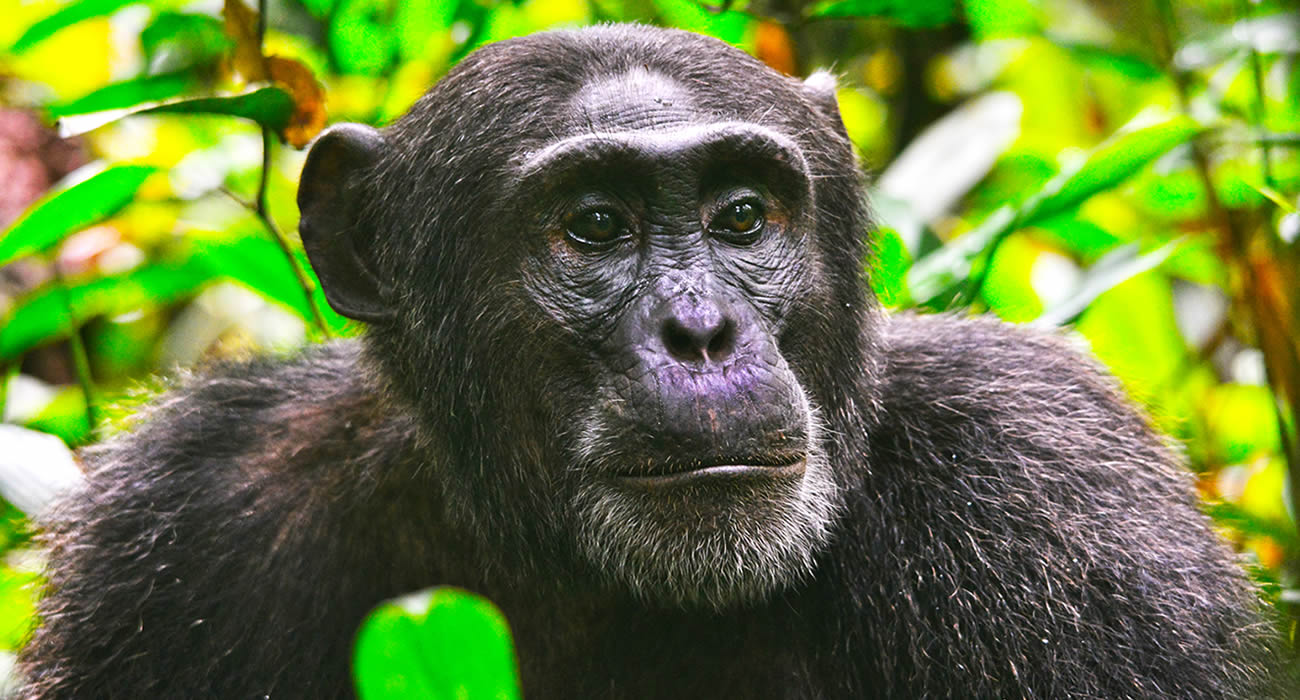
The magazine says: “Straddling the borders between Rwanda, Uganda and the Democratic Republic of Congo, the eight volcano chain is one of the Earth’s most active regions and a veritable salad bowl for mountain gorillas, Chimpanzees elephants, and other wildl9ife. Landscapes in all three countries conjure vision of both Eden and Hell. ”

In Uganda, the Virunga ranges comprising Muhabura, Mgahinga and Sabinyo peaks are located in kisoro district in south western Uganda. Uganda receives a small number of tourists averaging round 500 000 a year and earns over $650m in revenue from tourism every year. The country invests $300 000 which is the lowest compared to other East African countries. For instance Kenya invests $23m annually, Tanzania $10m and Rwanda $5m.

The National Geographic lists Uganda alongside other places in ice land, Thailand, Germany, Croatia, Colombia, Spain, US, Canada, Oman, UK, Guatemala, Sri Lanka, Greece, Northern Ireland, New Zealand, Panama, Peru and Mongolia. Last week the magazine featured Uganda’s tree climbing lions as the Photo of the Day in its, “50 Greatest Pictures” section.

Amos Wekesa the President of Uganda Tourism Association (UTA), said Ugandans to being appreciating their country as a top tourism destination. In the past the National Geographic has also listed Uganda’s Rwenzori mountains in the Best Hiking places in the world and the only one in Africa. Wekesa says: “the year 2012 is coming with 50 years of independence for Uganda and Opportunities. And as a Christian, this is God opening doors for Uganda.”  Early this month, Uganda was voted best tourism destination for 2012 by Lonely Planet, the World’s largest travel Guide book and digital media publisher. Uganda is favoured holiday destination for adventure travel to track Gorillas, water rafting and mountain trecking.

Uganda emerged as number one destination ahead of nine other countries that include Myanmar (Burma), Ukraine, Jordan, Denmark, Bhutan, Cuba, New Caledonia, Taiwan and Switzerland. Wekesa says following the publicity in the Lonely Planet, tourism opperlators have started getting inquries about tourism bookings. He, however, says there is need for President Yoweri Museveni to start speaking about the countery as a top tourist destination in the world.

“At the end of the year, if one million tourists come and each of them spends $3 000, that will be 3b from tourism,” Wekesa said.

Other Must-see sites

  • There is a range of natural – based attractions comprising fresh water lakes, rivers mountains, waterfalls, hot springs, forests, national parks, fresh and unique climate, among others. They includ Murchison falls National Park, Queen Elizabeth National Park, the source of the Nile in Jinja, Rwenzori mountain Ranges Ssese islands, Ngamba island chimpanzee Sanctuary, Sezibwa falls, Bwindi Impenetrable forest, Mabira forest, Uganda Wildlife Education Center and the Uganda Museum. Other tourist attractions include the UNESCO world heritage sites like the Nyero Rock Paintings, Kasubi tombs, (under renovation) and the newly discovered home of early man in Kalamoja.

Unique Cultures and Traditions.

  • Imbalu; The initiation of bys into man hood through circumcision ceremony in Bugisu, traditional wedding ceremonies in some Ares etc.
  • Religious sites including Namugongo Marty’s Shrine and the biggest mosque in Africa at Old Kampala, Gadaffi Mosque.  Namirembe and Rubaga Cathedrals are custodians of religious history in Uganda. Another holly place is the Bahai Temple the only one in Africa.

Tourism Figures

  • On average Uganda receives about 500 000 tourists per year. The number of tourists coming to Uganda shot from 534,117 in 2005 to 1,225,173 by 2008.
  • Uganda earns over $650m in revenue from tourism every year.
  • The tourism sector employs more than 150,000 Ugandans
  • Uganda invests $300,000 in tourism annually
  • Ranked at position 202 in the world, Kampala as a tourist city fares a lot better than Tanzania’s Dar-es-Salaama (187) and Kenya’s Nairobi (108).
  • Uganda has the highest density of primates such as Gorillas, Chimpanzees and Baboons in East Africa

By: Bruce Ampumuza

Microsoft to train Ugandans to make Software

Saturday, December 3rd, 2011
Share

The Ugandan government has signed an agreement with computer giant, Microsoft Corporation trial Development organization (UNIDO) for the establishment of two innovation centers.

Hardware: Dell and Hewlett Packard (hp) will supply hardware and specialized fitting for the center.

Under the programme, students will develop specialized software applications, which will b sold and used globally.

According to the agreement signed at the information and communications technology ministry7 in Kampala recently, Microsoft will provide training, technology and technical support to the two centers based at Makerere University and at the Uganda Green Computer company in Kampala.

Microsoft will also link the centers to Microsoft Innovation center worldwide for skills transfer and advice policy.

Two other computer firms, Dell and Hewlett Packard will supply Hardware, software and specialized fitting for the center.

Speaking at the signing ceremony, ICT minister Dr. RUhakana Rugunda said the center would create jobs and address country’s development challenges.

“Uganda Development is in Information Techno0lgy. It is in the ability to create and use software not the number of hoes and tractors we have “, he said

The Government’s role in the programe will include reviewing the ICT education policy, providing incentives for patents and reviewing and implementing laws relating to the use of refurbished computers.

The Government will also be a member to an advisory board and shall mobilize resources to support the centers.

UNIDO will promote the use of local software by small and medium enterprises and  and guide the implementation of the programme

Rugunda promised the government support to the programme and used stakeholders to ensure its successful implementation.

“it is common for people to sign documents and pile files on shelves. Let this one be different so that it helps young people to develop skills to change their world,” he said


By: Bruce Ampumuza

Tourism Uganda’s growth engine

Friday, November 25th, 2011
Share

It will take a Zillion years for Uganda’s agriculture to compete with Denmark’s

I was delighted when Lonely Planet, an International Publisher of the world’s largest travel guide book named Uganda the world’s number one tourist destination come 2012.

I have argued in many in many for over 15 years that tourism should be promoted as Uganda’s engine of growth. With 50% of the world’s mountain gorillas, 7% of the world’s mammal species, 11% of the world’s birds’ species, the longest river and the widest lake in the world, Uganda has no equal in eco-tourism.

To put this in perspective, there are about 750 highland mountain gorillas in the world, but 400 live in Uganda, the rest in Rwanda. The US with an area of 3,600,000 square miles, has 600 bird species, Europe with a wider area has 700 bird species, while Uganda, measuring just 93,000 square miles, boasts of 1,500 bird species. One can watch over 250 bird species just with in Uganda Wild life Education Center.

Uganda has high agricultural potential but almost zero comparative or competitive advantage over Denmark, the US, Brazil or South Africa, because potential remains potential, until it’s exploited.

It will take a Zillion years for Uganda’s agriculture to compete with Denmark’s, in yield per capita, marketing, research, quality control, access to finance, weather and climate management among others.

Mind you, even after such long strides, Danish farmers still get finance from subsidies from their government.

The Uganda farmer, still at the mercy of weather vagaries, has to suffer high production costs arising out of poor infrastructure and its attendant issues. Yet after all those uncertainties, the Uganda farmer seeks to compete with other world farmers, on their terms a tall order! Needless to say, we would need to invite in tourism just as much as in agriculture, but the promise of success and rate of return on investment is much higher and safe with tourism than agriculture.

I love tourism because tourism come here, with dollars, to sleep in our hotels eat our food, drink our coffee, use our bodas, buy our fuel, buy memorabilia and other Ugandan products, all on our terms, and leave all those dollars here. They are not like “investors” who come here to, pay about $100 (Sh259,000) for a work permit, then take out any amount hey want!

When I was shadow minister for agriculture, I recommended in one alternative policy Paper, that Uganda should promote tourism as the engine of growth so that tourists come to Uganda to eat our food and drink our coffee on our terms.

The recommendation was blocked by the leader of the opposition and opposition Chief Whip, who believed that as agriculture minister I had no business promoting tourism, besides, agriculture is Uganda’s mainstay, blah blah…………Thanks Lonely Planet, you have made my point.

Tourists to Malaysia have grown from 5.5 million in 1998 to 24.6 million tourists in 2010, yet Malaysia, about the same size and about same population as Uganda, has less to offer.

If Uganda could receive 25 million tourists per year, with each tourist spending just $500 (sh1.3m) in Uganda, we could easily raise $ 12.5b (240b) per year.

Today Uganda earns only $600m (sh1.35b) per year from tourism, with virtually no investment and about the same from agriculture, with so much investment. With $12.59 per year from just tourism, who needs the “oil curse”, which oil more over is estimated to last 30 years, when tourism last forever.

Let us go tourism because it is more than looking at gorillas, it also about an experience.

The Writer is the President Uganda Federal Alliance >> Beti Kamya

By: Bruce Ampumuza


Ministry starts national tour guides training

Wednesday, November 23rd, 2011
Share

The tourism industry has started a country wide training programme for tour guides in customer care.

The training is part of the efforts aimed at boosting the marketing of tourism industry, which is becoming the leading foreign exchange earner, generating over $600m last year.

“The training of UWA and private guides is, therefore, one strategy of addressing the challenge of inadequate professionalism in our tourism industry” , Prof. Ephraim Kamuntu, the tourism minister, observed in a speech read by Andrew Seguya, the Uganda Wildlife Authority (UWA) acting Boss.

This was at the pass out of 84 tour guides from different conservation areas in western Uganda at the Makerere University Biological Field station at Kanyawara in Kabale National Park.

The minister said much as Uganda was highly endowed, unless these attractions were packaged into acceptable tourism products coupled with skilled manpower in customer care, they will remain dreams and idealistic geographic items on our maps and records.

He also noted that findings have projected Uganda’s tourism sector to be the leading in Africa.

“We are excited by the recent ranking by the Lonely Planet that identified Uganda as the best tourism destination in 2012”. “We should capitalize on that achievement and aim higher,” the minister added. Lonely Planet is a global travel magazine.

Seguya pointed out that local have basked in a historical belief that tourism is only for the affluent from overseas, yet it is a track of our heritage.

He compared Uganda with the US, which earns $4b annually from  bird watching, and yet they have very few birds. He also noted that Europe has only 700 birds but Uganda with 1,057 birds, of which 335 species were found in Kibaale National Park alone. Does not even earn $1b out of bird watching

He attributed this to negative attitude by Ugandans and inadequate customer care accorded to visitors by the wildlife employees.

Seguya said that the training programme was one of the measures to promote domestic tourism and sensitize people about their heritage. Training of guides, he said, was pertinent in causing collective responsibility for natural conservation among the public.

“I encourage you all to use the skills you have learnt to develop our tourism potential further so that we all benefit from this resource.” He said modern structures would be erected in all the conservation areas in the next two years.

Herbert Byaruhanga, the chairman of Uganda Safari Guides Association, which conducted the training together with UWA, said capacity building was necessary for Uganda to take a comparative advantage in their tourism sector.

He emphasized the need for specialized training of guides in bird watching to take the front-line in portraying the image of the sector

By: Bruce Ampumuza

Tourism Uganda’s growth engine

Saturday, November 19th, 2011
Share

It will take a Zillion years for Uganda’s agriculture to compete with Denmark’s

I was delighted when Lonely Planet, an International Publisher of the world’s largest travel guide book named Uganda the world’s number one tourist destination come 2012.

I have argued in many in many for over 15 years that tourism should be promoted as Uganda’s engine of growth. With 50% of the world’s mountain gorillas, 7% of the world’s mammal species, 11% of the world’s birds’ species, the longest river and the widest lake in the world, Uganda has no equal in eco-tourism.

To put this in perspective, there are about 750 highland mountain gorillas in the world, but 400 live in Uganda, the rest in Rwanda. The US with an area of 3,600,000 square miles, has 600 bird species, Europe with a wider area has 700 bird species, while Uganda, measuring just 93,000 square miles, boasts of 1,500 bird species. One can watch over 250 bird species just with in Uganda Wild life Education Center.

Uganda has high agricultural potential but almost zero comparative or competitive advantage over Denmark, the US, Brazil or South Africa, because potential remains potential, until it’s exploited.

It will take a Zillion years for Uganda’s agriculture to compete with Denmark’s, in yield per capita, marketing, research, quality control, access to finance, weather and climate management among others.

Mind you, even after such long strides, Danish farmers still get finance from subsidies from their government.

The Uganda farmer, still at the mercy of weather vagaries, has to suffer high production costs arising out of poor infrastructure and its attendant issues. Yet after all those uncertainties, the Uganda farmer seeks to compete with other world farmers, on their terms a tall order! Needless to say, we would need to invite in tourism just as much as in agriculture, but the promise of success and rate of return on investment is much higher and safe with tourism than agriculture.

I love tourism because tourism come here, with dollars, to sleep in our hotels eat our food, drink our coffee, use our bodas, buy our fuel, buy memorabilia and other Ugandan products, all on our terms, and leave all those dollars here. They are not like “investors” who come here to, pay about $100 (Sh259,000) for a work permit, then take out any amount hey want!

When I was shadow minister for agriculture, I recommended in one alternative policy Paper, that Uganda should promote tourism as the engine of growth so that tourists come to Uganda to eat our food and drink our coffee on our terms.

The recommendation was blocked by the leader of the opposition and opposition Chief Whip, who believed that as agriculture minister I had no business promoting tourism, besides, agriculture is Uganda’s mainstay, blah blah…………Thanks Lonely Planet, you have made my point.

Tourists to Malaysia have grown from 5.5 million in 1998 to 24.6 million tourists in 2010, yet Malaysia, about the same size and about same population as Uganda, has less to offer.

If  Uganda could receive 25 million tourists per year, with each tourist spending just $500 (sh1.3m) in Uganda, we could easily raise $ 12.5b (240b) per year.

Today Uganda earns only $600m (sh1.35b) per year from tourism, with virtually no investment and about the same from agriculture, with so much investment. With $12.59 per year from just tourism, who needs the “oil curse”, which oil more over is estimated to last 30 years, when tourism last forever.

Let us go tourism because it is more than looking at gorillas, it also about an experience.

The Writer is the President Uganda Federal Alliance >> Beti Kamya

By: Bruce Ampumuza

Establish a National Airline to boost tourism in Uganda

Wednesday, November 16th, 2011
Share

The Minister of Tourism should work hand in hand with a revived Uganda Airlines or any other national airline to promote and develop the tourism industry in Uganda

The people of Uganda are calling upon the government to re-establish a national Airline as a matter of urgency for the sake of national interest, earning foreign currency and boosting our pride.

As a country, Uganda must have a national airline now. As a citizen who is much interested in the formation of national airline and who understands its economic importance to the nation, I have spoken to many people and they support the idea. An airline is an important national asset.

Any nation worth its salt must support a national airline where it has a stake. It can wholly own an airline or partially run a carrier with shareholding of 60 per cent government and 40 per cent private sector. The experience now is that the world is making money. So, Ugandans too must make money out of aviation industry and tourism. Since the unfortunate collapse of Uganda Airlines, our country has lost a lot of money to foreign carriers.

Right now, there are 15 airlines operating in and out of Entebbe. Nine of them make daily flights while others have four or five flights a week. All these airlines repatriate there earnings out of Uganda.

What shall we achieve as a result of Uganda its own national airline?

The economy will expand tremendously and Ugandans will get employment. We shall also have more cargo space for the horticultural products, among others, which we expect.

The tourism industry will prosper because the airline will work with tourism coordinators and operators to bring in tourist. A country cannot develop tourism conveniently and effectively if it does not own a national airline.

Today, if you walked into the offices of the various airlines which fly into Entebbe and ask for any literature that promotes tourism in Uganda, you will be lucky to get a simple black and white brochure.

Yet the economy of neighboring Kenya has grown tremendously in the last 30 years because Kenya owns and runs a successful Kenya Airways, which greatly boost its tourism sector.

By: Bruce Ampumuza >> From Kavuma -Kaggwa

PHOTO GALLERY

WE ACCEPT

credit cards

  Safari RSS Feed

   
  TripAdvisor Testimonies Find APS on Facebook Save to foursquare Find APS on twiter Follow African Pearl Safaris on Blogger LinkedIn Skype Me™!
  AFFILIATION / MEMBERSHIP
  Uganda Wildlife Authority Uganda Tourism Board
  Members of Association of
Uganda Tour Operators
Uganda Wildlife Authority Ugand Tourism Board